
Environmental Monitors
M3SH Environmental Monitors:
D52 - Dust Particulate Monitor:
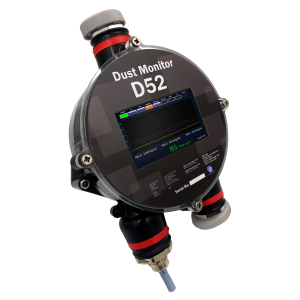
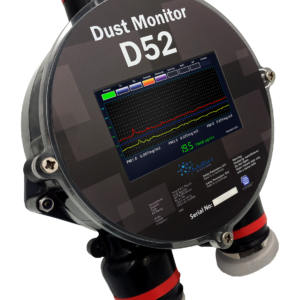
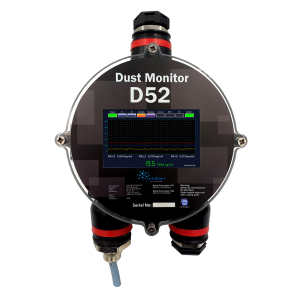
The D52 is a high-precision laser-based monitor that continuously measures airborne dust particles (PM1–PM10) in real time. It provides early detection of hazardous dust levels in mines and industrial sites, enabling automated ventilation or suppression responses. Its rugged design ensures reliable operation in harsh environments, supporting occupational health compliance.
APPLICATION
The D52 Dust Monitor is specifically designed for use in mining, manufacturing, and construction environments, where the concentration and variability of airborne dust pose significant operational and health risks. Using intelligent laser sensing technology, the D52 continuously measures and reports particulate matter (PM1.0, PM2.5, and PM10) in real-time. This allows companies to:
- Protect worker health, especially in environments with fine particulate exposure that can cause chronic respiratory illnesses.
- Comply with regulatory standards related to air quality and environmental monitoring.
- Enable immediate response through automated ventilation or suppression system integration when PM thresholds are exceeded.
- Empower management with the data and tools to manage health risks, ensure accountability, and demonstrate compliance with occupational safety laws such as OHSA and MHSA.
The D52 is ideally suited for underground mines, dust-intense zones, and sites where hazardous atmospheric conditions require intrinsically safe (Ex ia) certified equipment.
FEATURES:
- Intelligent laser particle counting for PM1.0, PM2.5, PM10
- Real-time data on TWA (time-weighted average)
- Self-cleaning, minimal maintenance (no pumps or filters)
- Integrated 5” color TFT LCD display with visual indicators
- IoT-enabled with wireless and wired data transfer
- Compatible with automated dust suppression and ventilation systems
- User-friendly SCADA interface with real-time monitoring
- Mobile and fixed installation options
- Dust impactor and cyclone separation for enhanced accuracy
- Secure housing rated to IP65 ingress protection
- No user-serviceable parts – designed for long life and low service requirements
SENSING CAPABILITIES:
- Detection Range: 0.30 µm to 10 µm
- Measurement Outputs: PM1.0, PM2.5, PM10, and PM Total
- Detection Limits (PM10): 0.01 to 1000 µg/m³
- Software Bins: 4 programmable measurement bins
- Response Time: < 60 seconds
- Sensor Calibration: Factory calibrated to default, with option for OEM recalibration cycles
TECHNICAL SPECIFICATIONS:
| Parameter | Value / Range |
|---|---|
| Sensor Type | Laser optical sensor |
| Measurement Range | 0.3 – 10 µm |
| Response Time | < 60 seconds |
| Power Supply Options | 9–20 VDC (Ex ia), 9–48 VDC, 85–265 VAC |
| Operating Temperature | -20 °C to 50 °C |
| Ingress Protection | IP65 |
| Communications | RS485 Modbus RTU, 802.15.4 Zigbee, IoT, Wi-Fi (802.11 b/g/n), GSM |
| SCADA Interface | M3SH-provided SCADA drivers & register map |
| Display | 5” Color TFT LCD with visual indicators |
| Mounting Options | Roof bolt (hook) or wall-mount (Fischer plugs) |
| Weight | Approx. 5 kg |
COMPLIANCE:
Standard Certifications
These apply to all D52 Dust Monitors as standard:
- SANS (IEC) 60079-0:2012 – General Requirements for Equipment for Explosive Atmospheres
- ISO 13849-1:2015 – Safety of Machinery – Functional Safety
- IEC 61508 – Functional Safety of Electrical/Electronic/Programmable Electronic Safety-Related Systems
- Certified for Group II (Surface Applications)
- Certification Number: MASC M/17-0059X
- Ingress Protection: IP65
Optional Certifications (as ordered or required by site application)
These are available on request or required for specific hazardous area applications:
- SANS (IEC) 60079-11:2012 – Intrinsic Safety “i”
- Explosion Protection Marking: Ex ia I Ma (-20°C to +55°C)
- Certified for Group I (Underground Mines including coal)
Regional Compliance Support:
To meet the needs of global customers, additional certifications and marks may apply depending on regulatory jurisdiction:
- CSA/UL Certification (North America):
- While MASC/IECEx is widely accepted, CSA (Canadian Standards Association) and UL (Underwriters Laboratories) marks may be optionally obtained for North American projects requiring local certification. These may be required for certain industrial, mining, or infrastructure projects under provincial/state regulations.
- CE Marking (European Union):
- CE compliance can be applied to meet EU health, safety, and environmental protection directives. CE marking is especially relevant for equipment installed in European surface mines and industrial environments.
- ANZEx / IECEx (Australia & New Zealand):
- The D52 can be certified for compliance with Group I (coal mines) per AS/NZS 60079 standards through local ANZEx or IECEx pathways. This ensures compatibility with Queensland and New South Wales coal mining regulations.
DPM50 - Diesel Particulate Monitor:
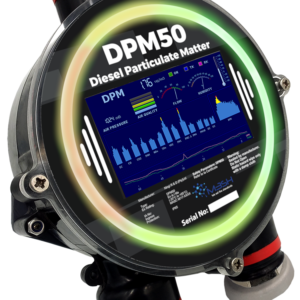
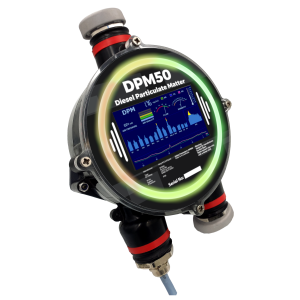
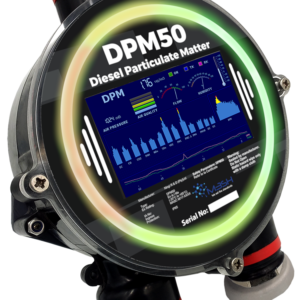
The DPM50 detects and quantifies diesel particulate matter (DPM) in underground and confined environments. It delivers real-time data on soot and aerosol exposure from combustion engines, ensuring early warning of harmful concentrations. Compact, durable, and IoT-enabled, the DPM50 supports emission compliance and protects worker respiratory health in mining operations.
APPLICATION
Diesel-powered equipment is essential in many heavy industries—such as mining, tunneling, construction, ports, and logistics—but its exhaust emissions pose significant risks to human health and regulatory compliance. The M3SH DPM50 is a purpose-built environmental monitoring device that offers real-time detection of diesel particulate matter (DPM), toxic gases, and ambient air quality indicators in both underground and surface operations. Available in Intrinsic Safe (Ex ia) and Non-Intrinsic Safe models, it provides robust, accurate performance in even the harshest industrial environments.
Governments and workplace regulators around the world are increasingly mandating the monitoring, recording, and control of diesel emissions in occupational environments. In North America, MSHA enforces stringent exposure limits for diesel emissions in U.S. underground mines, while NIOSH recommends real-time DPM monitoring to protect workers. In Canada, occupational health and safety codes require strict control measures for diesel exhaust, particularly in confined or poorly ventilated spaces. Across Europe, diesel engine exhaust (DEE) is now classified as a priority substance under the EU Carcinogens and Mutagens Directive (CMD), with many member states—including Germany, France, and the UK—implementing maximum exposure limits of 0.05 mg/m³ of elemental carbon (EC). Australia has also recognized diesel exhaust as a hazardous substance, with Queensland’s mining regulations requiring active DPM monitoring in underground coal mines. Meanwhile, in South Africa and Latin America, regulatory momentum is building—especially in platinum, gold, and coal sectors—where authorities are moving to enforce stricter environmental controls, recognizing that traditional ventilation systems alone are no longer adequate for safeguarding worker health.
Why Diesel Particulate Monitoring Matters
Diesel emissions are a complex mixture of gases and ultrafine particles, primarily consisting of Elemental Carbon (EC), Nitrogen Oxides (NOx), Volatile Organic Compounds (VOCs), and Polycyclic Aromatic Hydrocarbons (PAHs). The ultrafine particulate matter (PM2.5 and smaller) can penetrate deep into the lungs and even enter the bloodstream, leading to systemic health impacts.
Health Risks from Diesel Exposure
- Classified as a Group 1 Carcinogen by the International Agency for Research on Cancer (IARC) since 2012
- Linked to lung cancer, bladder cancer, cardiovascular disease, and respiratory ailments.
- Chronic exposure can cause chronic obstructive pulmonary disease (COPD), asthma, and premature mortality.
- Ultrafine particles carry adsorbed toxins like PAHs and heavy metals, enhancing their biological reactivity.
Why the DPM50 is Critical for Compliance & Safety
- Real-time monitoring ensures immediate detection of hazardous exposure levels, enabling early intervention.
- Multi-sensor configuration allows simultaneous tracking of diesel particulates and gases such as CO, NOx, SOx, and VOCs.
- Built-in alarms and SCADA integration allow for automated ventilation activation or triggering of safety protocols.
- Digital signatures and AI-based analytics enable long-term exposure trend analysis and proactive health risk mitigation.
FEATURES
- Multi-sensor monitoring of PM1, PM2.5, PM4, PM10, EC, CO, CO₂, NOx, SOx, O₃, PAH, VOCs, O₂, H₂S, HCN, and Air Quality Index (AQI)
- Real-time data visualization including Time-Weighted Averages (TWA)
- Edge AI processing enables local predictive analysis for early risk detection
- Integrated 5” color TFT LCD display with configurable visual alarms
- 95 dB audible alarm for immediate hazard notification
- Intrinsically Safe (Ex ia I Ma) and Non-IS models available
- Built-in battery backup (2h or 4h) for continued operation during power failure
- IP66-rated enclosure made from reinforced thermoset composite for harsh environments
- Wired Modbus RTU (RS-485) and multiple wireless communication options (Private 5G, M3SH, Wi-Fi, 802.15.4, GSM)
- SCADA integration-ready with supplied Modbus register maps
- No user-serviceable parts – designed for long-term, low-maintenance use
- Automatic shutdown and recovery function to preserve battery life
- Compatible with cloud dashboards and open API for third-party integration
- Mounting and bump testing accessories available for field calibration and verification
SENSING CAPABILITIES
Standard Included Sensors
| Sensor Type | Target Component / Purpose | Measurement Range |
|---|---|---|
| PM1 / PM2.5 / PM4 / PM10 | Diesel particulates & airborne matter | 0.3 – 10 µm, up to 1000 µg/m³ |
| Elemental Carbon (EC) | Key diesel exhaust indicator | Real-time, TWA, Avg. in µg/m³ |
| Carbon Monoxide (CO) | Toxic gas from incomplete combustion | 0 – 1000 ppm |
| Carbon Dioxide (CO₂) | Indicator of ventilation levels | 400 – 65,000 ppm |
| Nitrogen Oxides (NOx) | Combustion pollutants (NO, NO₂) | 1 – 500 Index points |
| Sulfur Oxides (SOx) | Diesel fuel and process emissions | [Calibrated, no ppm specified] |
| Volatile Organic Compounds (VOCs) | Toxic hydrocarbons (benzene, formaldehyde) | 0 – 65,000 ppm |
| Ozone (O₃) | Oxidizing agent, air quality indicator | 0 – 5 ppm |
| Oxygen (O₂) | Confined space safety | 0 – 30 % |
| Humidity | Ambient condition | 0 – 100 % RH |
| Ambient Temperature | Environmental condition | –40 °C to +125 °C |
| Barometric Pressure | Altitude / ventilation correlation | 300 – 1200 hPa |
| Air Quality (IAQ) | Integrated index combining gas and particle data (AQI 1–5) | AQI Index 1 – 5 |
Optional / On-Request Sensors
| Sensor Type | Target Component / Purpose | Measurement Range |
|---|---|---|
| Polycyclic Aromatic Hydrocarbons (PAHs) | Diesel combustion by-products | [Calibrated] |
| Hydrogen Cyanide (HCN) | Highly toxic combustion gas | 0 – 5 ppm |
| Hydrogen Sulphide (H₂S) | Toxic, flammable gas in mining/oil | 0 – 100 ppm |
| Ammonia (NH₃) | Chemical manufacturing emissions | Not specified |
Ambient Conditions Monitored
| Parameter | Range | Notes |
|---|---|---|
| Ambient Temperature | –40 °C to +125 °C | Condensation-resistant |
| Humidity | 0 – 100 % RH | Fast response, high stability |
| Barometric Pressure | 300 – 1200 hPa | Accurate atmospheric monitoring |
| Air Quality Index | AQI 1 – 5 scale | Based on multiple inputs |
TECHNICAL SPECIFICATIONS
| Parameter | Specification |
|---|---|
| Model Variants | Intrinsic Safe (Ex ia), Non-Intrinsic Safe |
| Power Supply (IS Model) | 9–18 VDC from certified IS power supply |
| Power Supply (Non-IS Model) | 9–48 VDC or 115/240 VAC |
| Battery Backup | 2200 mAh (~2 hrs) or 4400 mAh (~4 hrs), auto-recharging, auto-shutdown mode |
| Power Consumption | 100–500 mA |
| Ingress Protection Rating | IP66 |
| Display | 5″ TFT full-color LCD display |
| Audio-Visual Alarms | Visual LED (configurable), 95 dB audible alarm |
| Communication (Wired) | RS-485 (Modbus RTU) |
| Communication (Wireless) | Private 5G, Wi-Fi (802.11), GSM, M3SH Network |
| Output Interfaces | Modbus RTU, 2 × relay outputs (IS limited to 2 A / 250 V AC) |
| Data Logging & Protocol | Real-time values, averages, TWA (1–8 hrs), alarm triggers, Modbus mapping |
| Mounting | Wall or roof-bolt mounting via Fischer plugs |
| Operating Temperature | –40 °C to +75 °C (Ex ia version) |
| Sensor Maintenance | Factory calibrated; no user-serviceable parts; 12-month OEM recalibration cycle |
| Weight | Approx. 3.24 kg |
| Material (Enclosure) | Glass-reinforced polyester (chemical and corrosion resistant) |
COMPLIANCE CERTIFICATIONS
Standard Certifications
These apply to all DPM Diesel Particulate Monitors as standard:
- SANS (IEC) 60079-0:2019 – General Requirements
- SANS (IEC) 60079-11:2024 – Intrinsic Safety “i”
- SANS (IEC) 1515-2:2022 – Fixed Gas Measuring Devices
- SANS (IEC) 60079-29-1:2022 – Performance of Gas Detectors
- ISO 13849-1:2015 – Functional Safety
- IEC 61508 – Safety of Electrical/Electronic Systems
- Ingress Protection: IP66
Optional Certifications (as ordered or required by site application)
- These are available on request or required for specific hazardous area applications:
- SANS (IEC) 60079-11:2012 – Intrinsic Safety “i”
- Explosion Protection Marking: Ex ia I Ma (-20°C to +55°C)
- Certified for Group I (Underground Mines including coal)
Regional Compliance Support
To meet the needs of global customers, additional certifications and marks may apply depending on regulatory jurisdiction:
- CSA/UL Certification (North America):
While MASC/IECEx is widely accepted, CSA (Canadian Standards Association) and UL (Underwriters Laboratories) marks may be optionally obtained for North American projects requiring local certification. These may be required for certain industrial, mining, or infrastructure projects under provincial/state regulations. - CE Marking (European Union):
CE compliance can be applied to meet EU health, safety, and environmental protection directives. CE marking is especially relevant for equipment installed in European surface mines and industrial environments. - ANZEx / IECEx (Australia & New Zealand):
The D52 can be certified for compliance with Group I (coal mines) per AS/NZS 60079 standards through local ANZEx or IECEx pathways. This ensures compatibility with Queensland and New South Wales coal mining regulations.
P50 Multi-Gas Monitor:
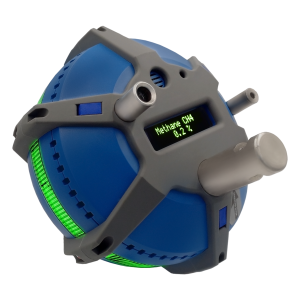
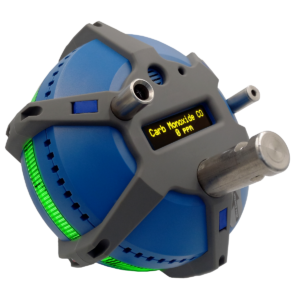
The P50 is a fixed environmental monitoring unit designed for harsh, potentially explosive environments. It tracks gases such as CO, CH₄, and CO₂, along with temperature and humidity. With real-time alerts, a robust alarm system, and intrinsic safety certifications, the P50 ensures continuous atmospheric safety monitoring in underground operations.
A fixed, multi-sensor gas monitoring unit designed for extreme and hazardous environments such as explosive or gaseous atmospheres. The P50 continuously tracks a variety of environmental parameters and is equipped with sensors for temperature, humidity, carbon dioxide, and other toxic or combustible gases. It features real-time digital displays, a high-decibel audio alarm, and a 360° LED strobe, providing immediate warnings when unsafe gas levels or conditions are detected. An 8-hour battery backup and support for both wireless and RS-485 communication ensure reliable data transmission to control systems even during power disruptions. For safety in volatile atmospheres, the P50 is available in intrinsically safe models, meaning it operates without igniting flammable gases, and meets rigorous mining standards for explosion-proof equipment.
S50 Smoke and Early Fire Monitor:
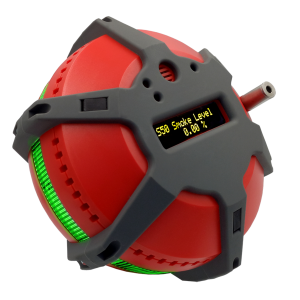
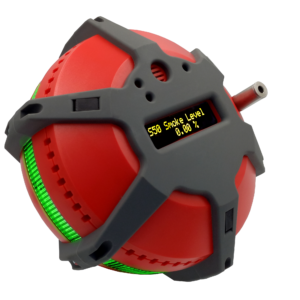
The S50 is an intelligent early fire detection system that distinguishes actual smoke from nuisance signals like diesel exhaust or welding fumes. Using advanced sensing algorithms and optical detection, it provides rapid alerts with minimal false alarms. Ideal for high-risk zones, the S50 supports prompt, reliable fire safety interventions.
An intelligent area monitor for early fire detection that can distinguish genuine fire emergencies from false signals. Using advanced sensing algorithms, the S50 differentiates between real fire smoke and deceptive sources like welding fumes, diesel exhaust, or hot works, greatly reducing false alarms. It employs photoelectric smoke detection to catch incipient fires at an early stage, triggering alarms and alerts so that interventions can occur before a fire spreads. This precise early warning system enhances safety by ensuring reliable fire detection while avoiding unnecessary panic or work stoppages.
P511 Air Velocity Monitor:
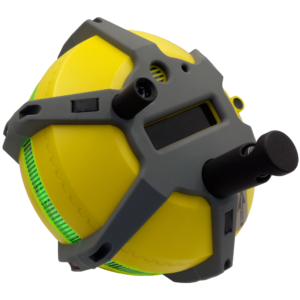
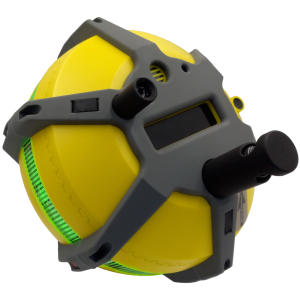
The P511 continuously measures airflow velocity in mine tunnels and shafts, ensuring proper ventilation to dilute gases and maintain breathable air. With configurable alarms and real-time output, it detects changes in air movement instantly. Its rugged, low-maintenance design makes it a critical component of mine ventilation safety systems.
A real-time airflow sensor used to ensure optimal mine ventilation. The P511 continuously measures air velocity in tunnels and shafts, verifying that fresh air is moving at required rates to dilute gases and provide oxygen. It features configurable audible and visual alarms that trigger if airflow falls outside of safe parameters, alerting personnel to ventilation failures or stoppages. This allows for immediate corrective action (such as adjusting fans or investigating obstructions) to maintain a safe atmospheric environment. With its accurate sensing technology, the P511 helps mine operators manage ventilation systems efficiently and prevent dangerous conditions like gas build-ups or oxygen deficiency.
Noise Monitoring Devices (NM Series):

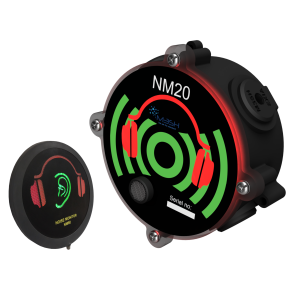
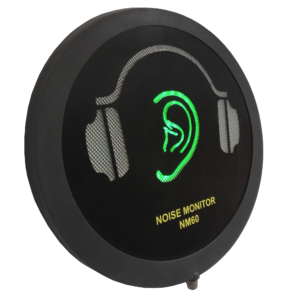
The NM Series offers accurate, real-time monitoring of environmental noise levels across mining operations. These devices help ensure compliance with occupational noise exposure limits, reducing the risk of hearing loss. Engineered for durability and precision, they support proactive noise management and data logging for regulatory reporting and workplace safety.
Durable sound level monitors designed to continuously track ambient noise in mining environments. These devices cover a broad frequency range with high precision, detecting noise exposure levels in real time. By monitoring noise 24/7, they help ensure compliance with regulatory limits on sound exposure and protect workers from noise-induced hearing loss. The system can generate alerts or logs when noise exceeds safe thresholds, allowing engineers to implement additional noise controls (e.g. dampening measures or personal protective equipment) in high-noise areas. The NM series’ high accuracy and reliability provide confidence that the mine’s sound levels remain within safe limits, contributing to a safer and more comfortable work environment.